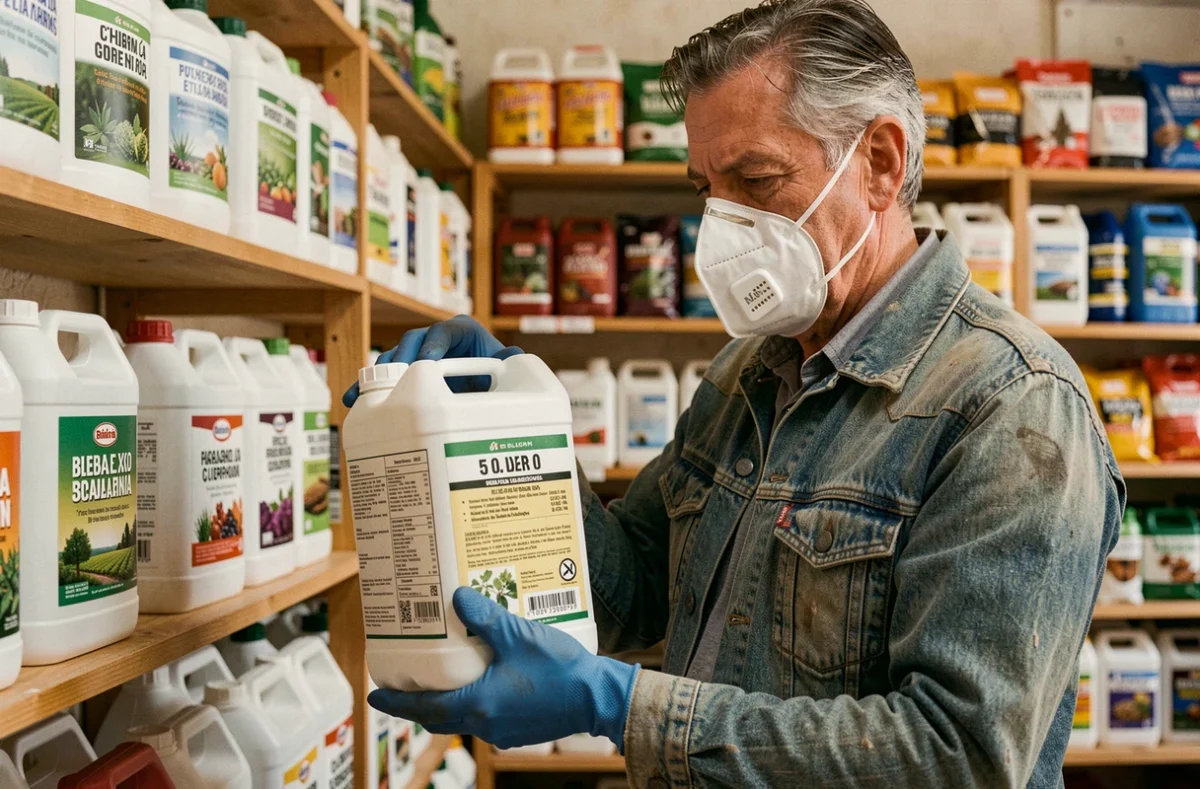
Glyphosate remains an active substance approved at the European level until December 2033, under the implementing regulation (EU) 2023/2660. Buying a 5-liter canister from a Spanish cooperative is not difficult in itself. The problem arises when checking what this canister actually contains, which regulatory framework it complies with, and what happens when it crosses the border.
Authorization of the active substance and authorization of the formulated product: two distinct levels
Confusing the European approval of glyphosate with the legality of a specific canister is the most common mistake. The European Union approves the active substance. Each member state then authorizes the formulated products on its territory, via a national market authorization number.
A canister sold in Spain bears a MA issued by the MAPA (Spanish Ministry of Agriculture). This number appears on the label and corresponds to a specific product, with defined concentration, co-formulants, and uses. Two canisters containing glyphosate at different concentrations do not have the same MA, and their usage conditions vary.
Before any purchase, it is necessary to consult the Spanish register of plant protection products from the MAPA to verify that the product’s trade name and its authorization number are listed there. A product absent from this register, even labeled “glyphosate,” has no legal basis for marketing in Spain. Those sourcing glyphosate 5 liters in Spain without this verification are taking a risk right from the point of sale.
Status of the buyer in Spain: ROPO register and plant protection training
The idea that purchasing glyphosate would be “free” in Spain deserves nuance. The Spanish framework distinguishes between professional use products and products intended for the general public. A 5-liter canister with high concentration generally falls under the professional category.
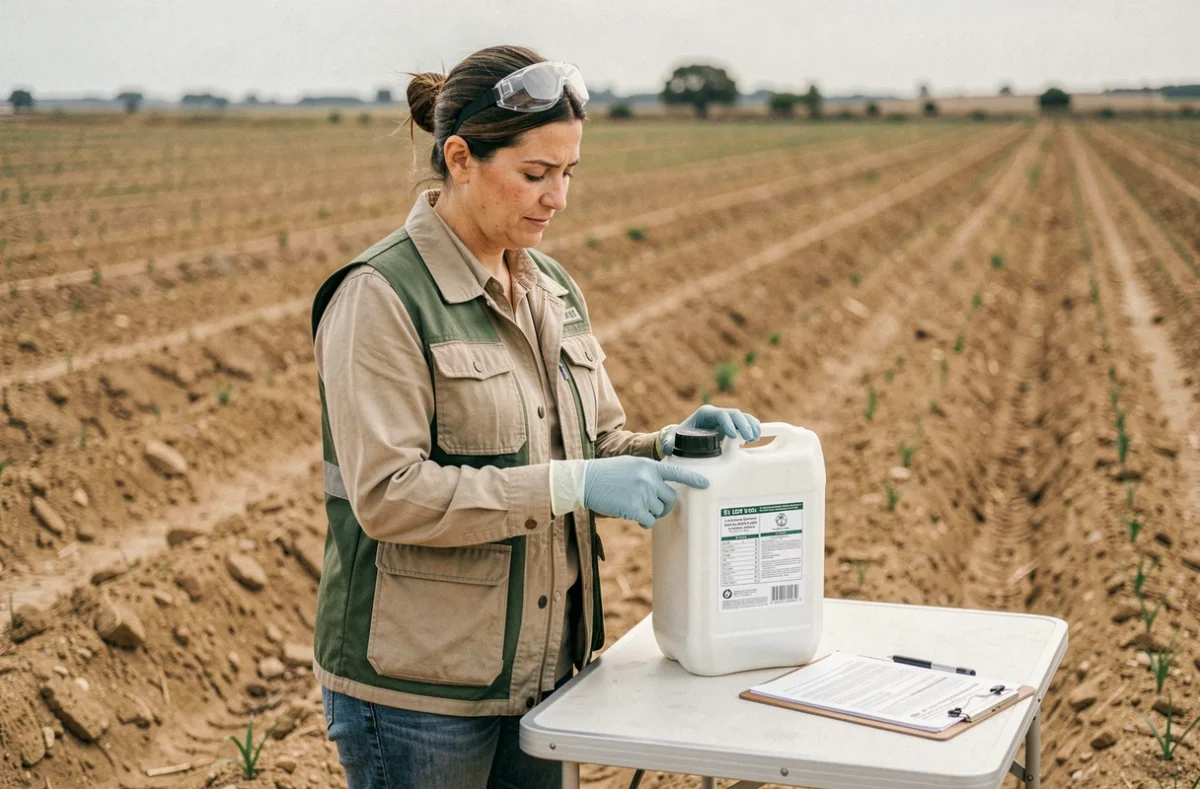
For these products, Spain requires operators to register with the ROPO register (Registro Oficial de Productores y Operadores) and to have validated plant protection training. This training covers handling, dosing, protective equipment, and environmental obligations.
A French individual who presents themselves at a Spanish agricultural cooperative to buy a professional product without proof of training or ROPO registration finds themselves in a gray area. Some retailers sell without verification, while others require the handling booklet. The responsibility for compliance lies with the buyer.
European free movement and parallel trade of plant protection products
The European single market guarantees the free movement of goods, but this rule does not equate to automatic authorization for use in another country. A plant protection product purchased in Spain does not become usable in France simply because it has crossed the border.
The legal mechanism that allows the marketing of a product authorized in one member state in another is called parallel trade. It requires three cumulative conditions:
- The product must be authorized in the country of origin (here Spain) with a valid MA.
- An identical or equivalent reference product must already be authorized in the destination country (here France).
- The importer must obtain a parallel trade permit from the competent authority of the destination country before any marketing.
Without this permit, the Spanish product has no regulatory status in France. Its use, possession for application purposes, and resale constitute offenses. The confusion between “legal product in Spain” and “legal product throughout the EU” fuels most non-compliance situations.
PAC controls and plant protection traceability on the farm
For farmers receiving PAC aid, the issue goes beyond customs. The PAC conditionality requires an up-to-date plant protection register, in which each treatment is recorded with the product name, its MA number, the treated plot, the dose, and the date.
A product bearing a Spanish MA without an equivalent French authorization cannot validly appear in this register. During a control, the absence of correspondence between the product used and a valid French MA results in a finding of non-compliance. Consequences range from a reduction in aid to its suspension.
The plant protection register is not a negligible administrative formality. Inspectors check the consistency between purchase invoices, stocks, and declared treatments. A 5-liter canister bought in Spain, invoiced in euros with a label in Spanish, draws attention.
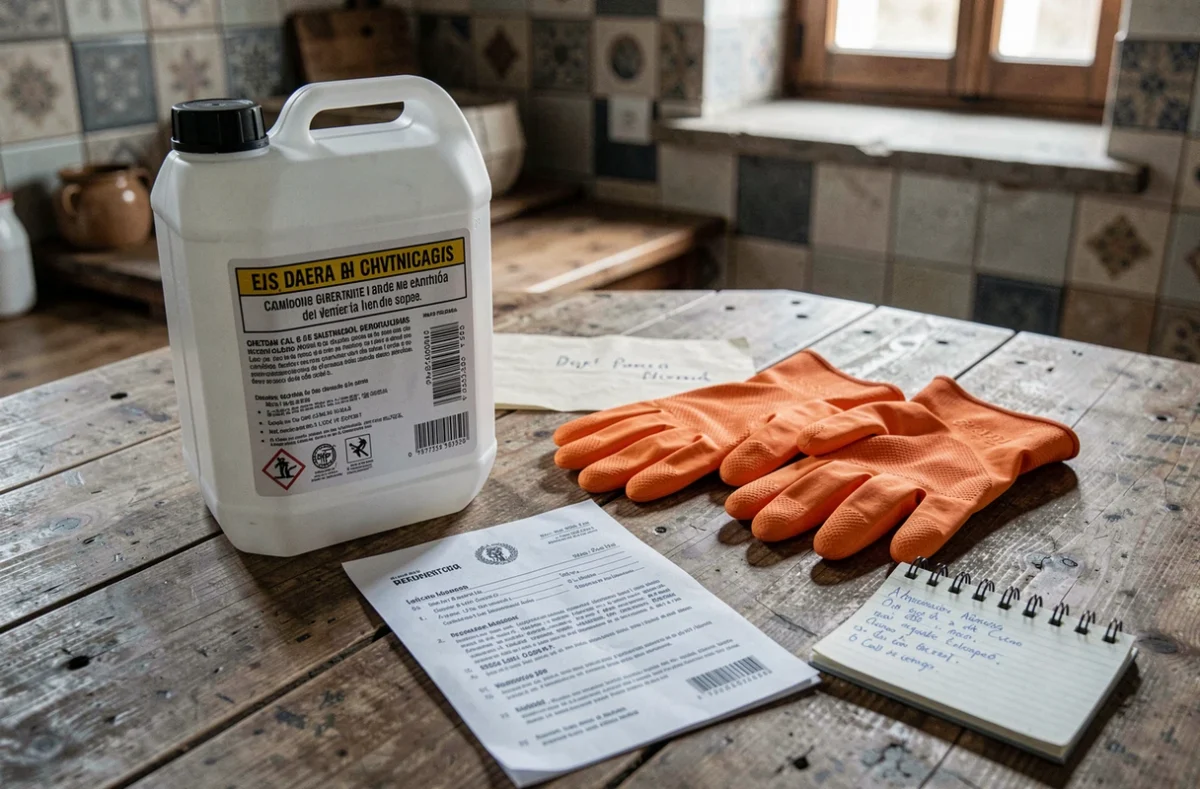
Points checked during a conditionality control
- Correspondence between the stored product and a valid French MA, consultable in the ANSES catalog of authorized uses.
- Maintenance of the plant protection register with all mandatory mentions (product, dose, crop, date, plot).
- Compliance with no-treatment zones and pre-harvest intervals, which may differ between the Spanish and French MAs for the same active ingredient.
- Validity of the operator’s or applicator’s Certiphyto, mandatory in France for any professional use of plant protection products.
European corrigendum of July 2026: a technical detail with practical consequences
A corrigendum published on July 24, 2026, in the Official Journal of the EU corrected technical elements of regulation 2023/2660. The substance of the approval has not changed, but the technical conditions attached to the substance have been updated.
This update requires manufacturers and distributors to verify the compliance of their products with the new specifications. A canister produced before this date may no longer meet the updated requirements. For a buyer, this means that old stock in a Spanish cooperative does not offer the same guarantees as a product recently placed on the market.
Checking the manufacturing date and the label version is part of the basic precautions, just like verifying the MA number in the MAPA register.
Cross-border purchasing of glyphosate relies on a distinct chain of compliances: European approval of the substance, national MA of the formulated product, buyer’s status, parallel trade permit for importation, and documentary consistency on the farm. Each missing link turns an apparently simple purchase into a characterized offense.