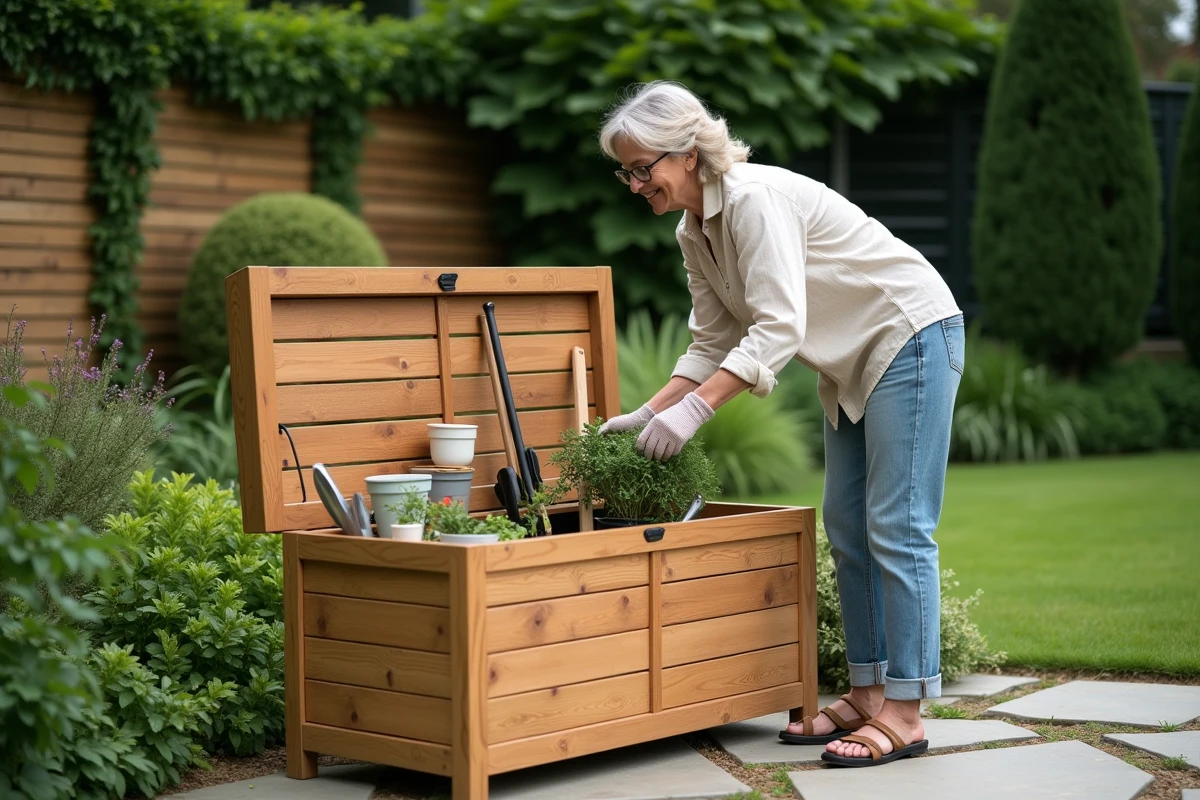
The outdoor storage box serves a simple function: to store tools, cushions, and garden accessories protected from the elements, without taking up the living space of a shed or garage. The market today offers models in resin, wood, or metal, with capacities ranging from a few hundred to over a thousand liters. Choosing the right box involves looking beyond just the volume to consider the material, placement, and local regulatory constraints.
Recycled materials and low-carbon resin: what’s changing in garden boxes
Since 2023-2024, several manufacturers like Keter or Grosfillex have been displaying the proportion of post-consumer recycled plastic integrated into their outdoor boxes on their product sheets. Recent ranges (Elite, Denali from Keter) claim to have reduced carbon footprints compared to previous generations.
This trend, however, is still rarely addressed in consumer guides. Catalogs mention recycled materials, but the protocols for measuring carbon footprints are not always detailed. Field feedback varies on this point: some users notice a slightly different finish on models made from recycled resin, while others see no difference compared to traditional boxes.
Wood remains an alternative for gardens where aesthetics are paramount. A treated autoclave wood box withstands the elements but requires regular maintenance (staining, sanding). Resin, whether recycled or not, only needs a wash with a water jet. For those looking for an outdoor storage box from Brico Dépôt, resin ranges often provide the best compromise between budget and durability.
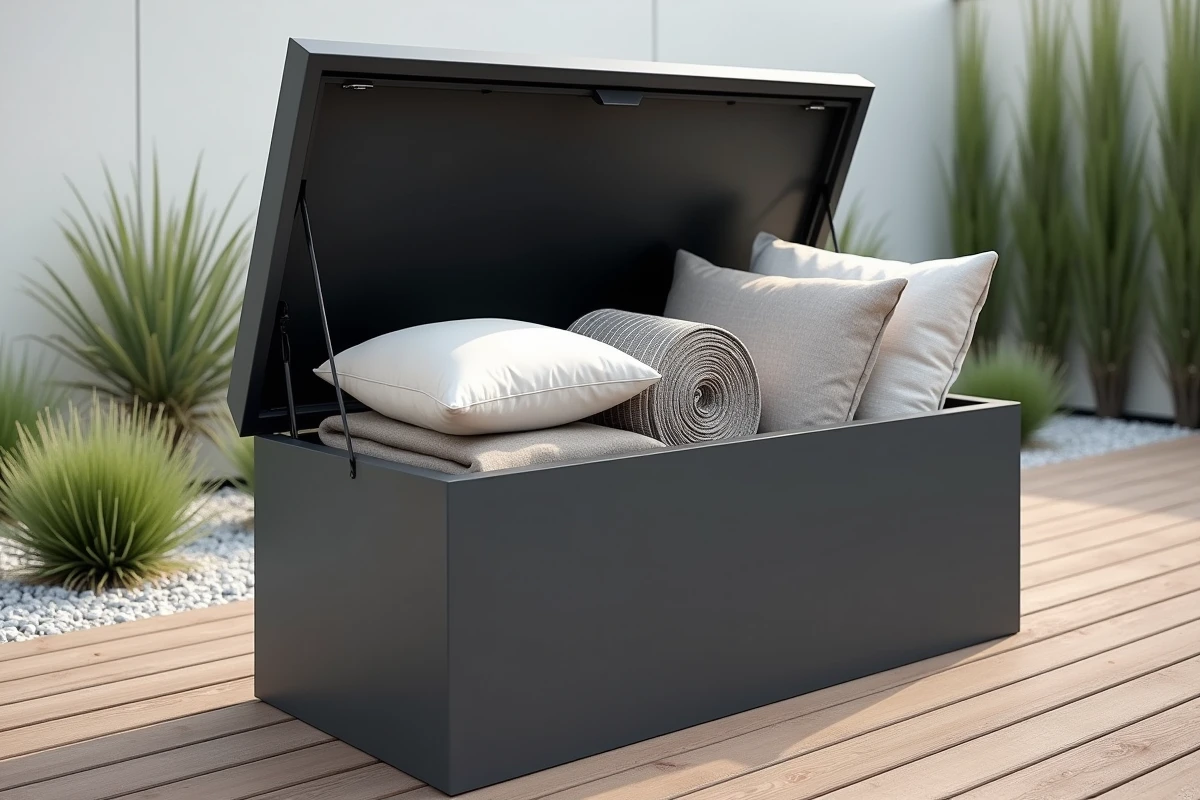
Outdoor box in a condominium and urban garden: constraints to anticipate
The use of storage boxes is spreading in building courtyards, rooftop terraces, and shared gardens. Urban gardening associations store shared equipment there: watering cans, potting soil, small tools. The box then becomes a collective rather than an individual item.
Before installing a box in these spaces, two checks are necessary:
- The condominium regulations may prohibit or regulate the placement of furniture visible from the facade. Several revised PLU regulations since 2022 include provisions regarding elements visible from public space.
- On a balcony or terrace on an upper floor, the allowable load of the floor limits the weight of the box once filled. A large-capacity box loaded with metal tools weighs much more than one might imagine.
- In a shared garden, the issue of locking arises: a padlock compatible with the box prevents tensions between users and protects shared equipment.
These constraints are almost never mentioned on product sheets. The available data does not allow for a comprehensive list of municipalities affected by PLU restrictions, but the reflex to consult the local urban planning service before purchase can prevent disappointments.
Placement and interior organization of the storage box
Placing a box at the back of the garden for convenience is the most common reflex and often the least effective. The ideal location is in immediate proximity to the area of use: near the vegetable garden for gardening tools, near the terrace for outdoor cushions and tablecloths.
The ground under the box deserves attention. A box placed directly on damp soil promotes water stagnation under the base, even with an integrated floor. A slab, a gravel bed, or plastic pads are sufficient to create natural ventilation and prolong the box’s lifespan.
Organizing the interior without unnecessary accessories
There is a temptation to buy dividers, bins, and hooks to structure the interior of the box. In practice, two or three sturdy fabric bags can effectively replace expensive accessories. One bag for hand tools, another for cleaning products, a third for textile items (cushions, covers).
Internal shelves are only justified for very large-capacity boxes, those that exceed 500 liters and whose depth makes the bottom difficult to access. For a standard box, stacking by category while placing heavy items at the bottom and lighter ones on top remains the simplest method.
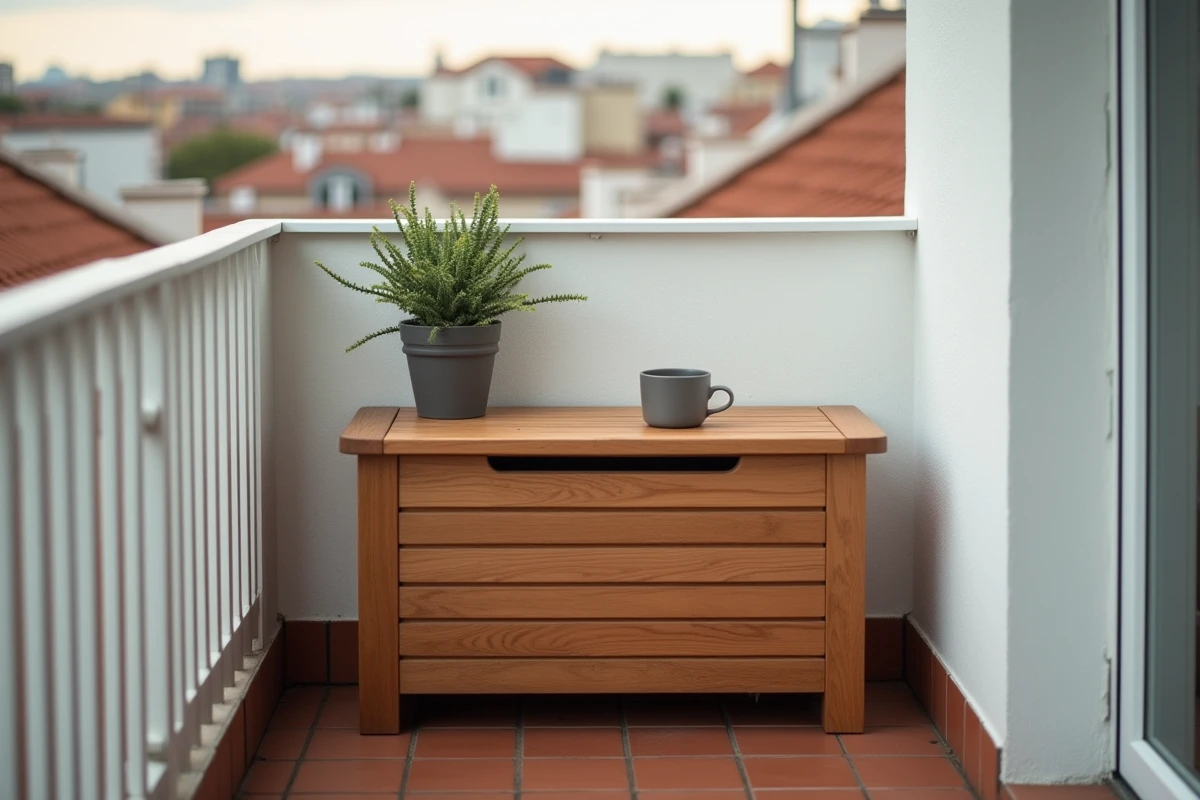
Resin, wood, or metal: criteria for choosing a durable outdoor box
The choice of material determines maintenance, resistance to the elements, and aesthetic integration into the garden.
- Treated UV-resistant resin does not rust, rot, and is easy to clean. It is suitable for humid climates and full sun exposure. Models made from recycled resin now show performance comparable to virgin resins.
- Wood (pine, acacia, eucalyptus) offers a natural appearance that integrates well into a planted garden. It requires staining or treatment every two to three years to maintain its appearance and strength.
- Metal (galvanized steel, aluminum) resists impacts and attempted break-ins but condenses moisture inside with temperature variations. A metal box without ventilation is not suitable for storing textiles or seeds.
The most suitable material depends on the contents stored, not just the budget. A resin box adequately protects garden lounge cushions. A wooden box is better suited for tools that need to be kept dry without condensation. Metal is reserved for situations where the security of the contents takes precedence over storage comfort.
The capacity in liters, often highlighted by manufacturers, says nothing about the interior shape. A long and shallow box accommodates tool handles; a cubic box maximizes volume but complicates access to items at the bottom. Checking the actual interior dimensions before purchase remains the most useful action, much more than comparing liters in a catalog.