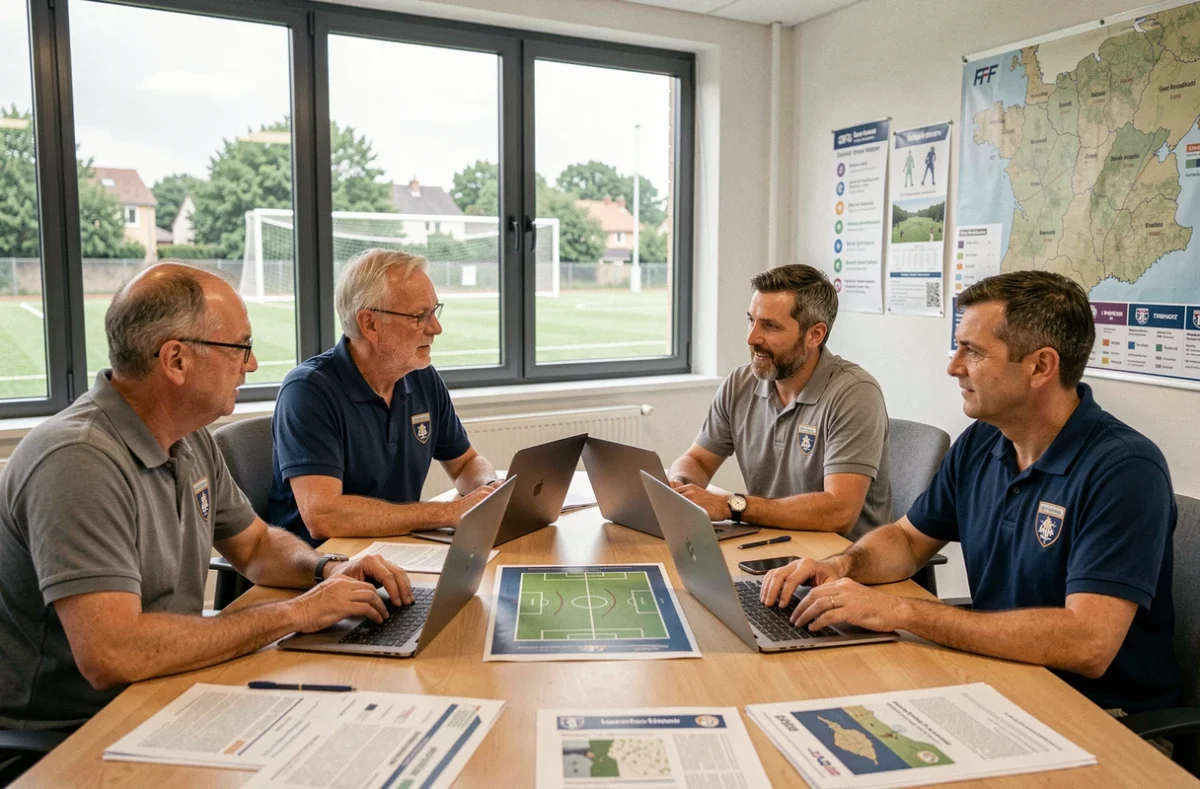
When a football club in Essonne registers its teams for a league, submits a transfer request or reports an incident on the pitch, it contacts a specific organization: the district. Affiliated with the French Football Federation, this departmental body manages the day-to-day running of amateur football. In Essonne, the district identified by code 91 coordinates competitions, player registrations and refereeing across all the clubs in the department.
District committees: who makes which decisions in Essonne football
Before looking at matches or league tables, it helps to understand who makes the decisions. An FFF district is run by a Management Committee, which appoints several specialist committees, each with a clearly defined remit.
- Disciplinary Committee: rules on cards, suspensions and conduct reported by referees or clubs after each round of competition.
- Cup Organization Committee: sets the schedules, assigns pitches and handles any postponements due to bad weather or unavailable facilities.
- Sporting Review Committee: checks that results comply with the rules, handles appeals and approves the official standings at each stage of the league.
In practice, when a club official disputes a result or a player receives a red card, the case goes before the relevant committee. Its decision is based on the district’s own General Sporting Regulations (RSG). These set out local rules, including points awarded for a win, disciplinary scales and pitch certification requirements.
To keep up with the activities and decisions of the Essonne District Football Association, clubs regularly check the dedicated FFF platform, where notices, results and official documents are published.
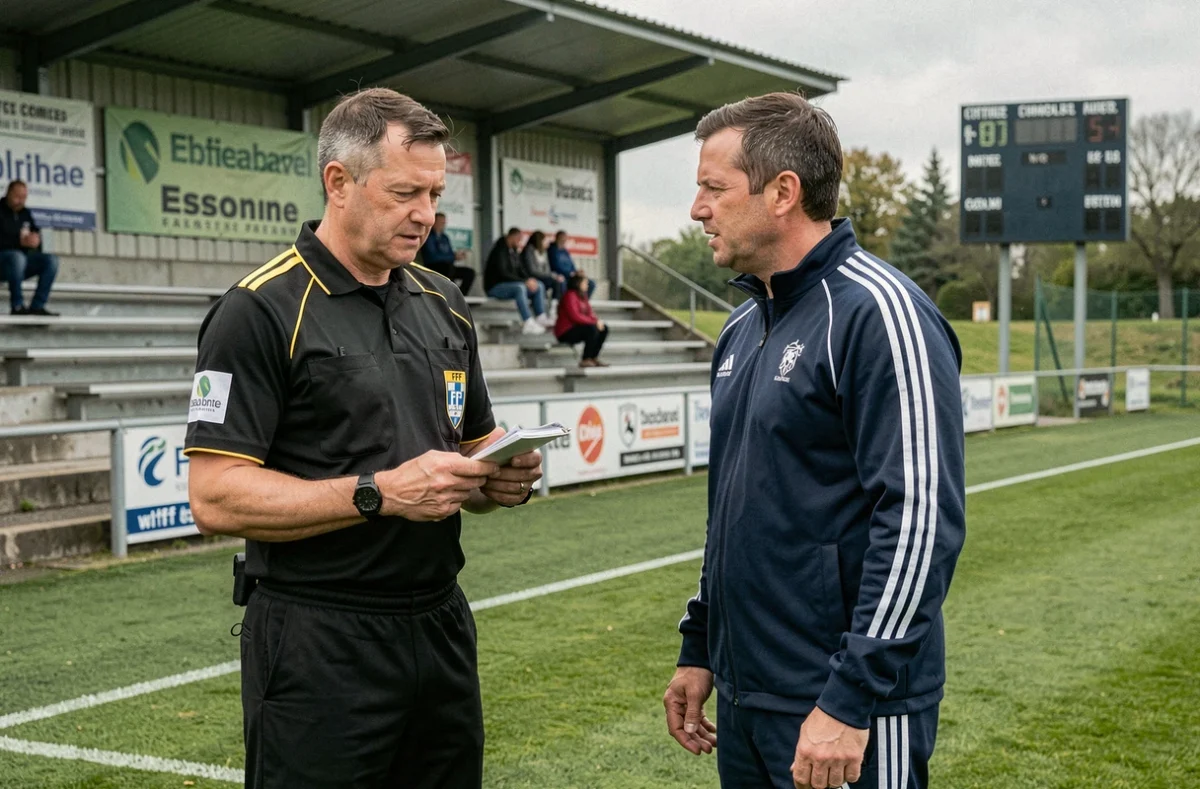
How pools and departmental leagues are organized in Essonne
Wondering how your team ends up in a particular pool? The district divides clubs into several tiers, from D1 (the highest departmental level) down to D4. Each tier is further divided into pools, or groups of clubs that play against one another.
Teams are assigned based on the previous season’s standings and geographical criteria. The aim is to limit travel for younger age groups and ensure a balanced number of matches throughout the season.
Promotion, relegation and league phases
The league is divided into several phases, usually a first and second half of the season, sometimes followed by placement rounds. At the end of the season, the top teams in each pool move up a level, while the bottom teams move down.
The system may seem straightforward, but exceptions are common. A club withdrawing a team mid-season, a merger between two associations or a pitch being declared non-compliant can all affect the promotion and relegation calculations. The Sporting Review Committee rules on these cases based on the RSG.
For younger age groups (U6 to U13), the format is different. This is known as grassroots football: there are no official standings, promotions or relegations. Instead, matches are organized as festivals, with several teams meeting at one venue to play short games.
Player registrations and transfers: the administrative process in a district
Every player registered with a club in Essonne holds a license issued by the FFF through the district. This license allows them to take part in official competitions. Without one, a player cannot be listed on a match sheet.
A transfer is when a player moves from one club to another. In amateur football, the process goes through the district. The player (or their parents if they are a minor) submits a request, the former club may or may not give its consent, and the district approves the transfer during the periods set out in the federation calendar.
Transfer windows are strictly enforced. Outside these periods, players cannot change clubs except in exceptional circumstances, such as moving house or the dissolution of their former club. These restrictions are intended to protect the competitive balance of ongoing competitions.
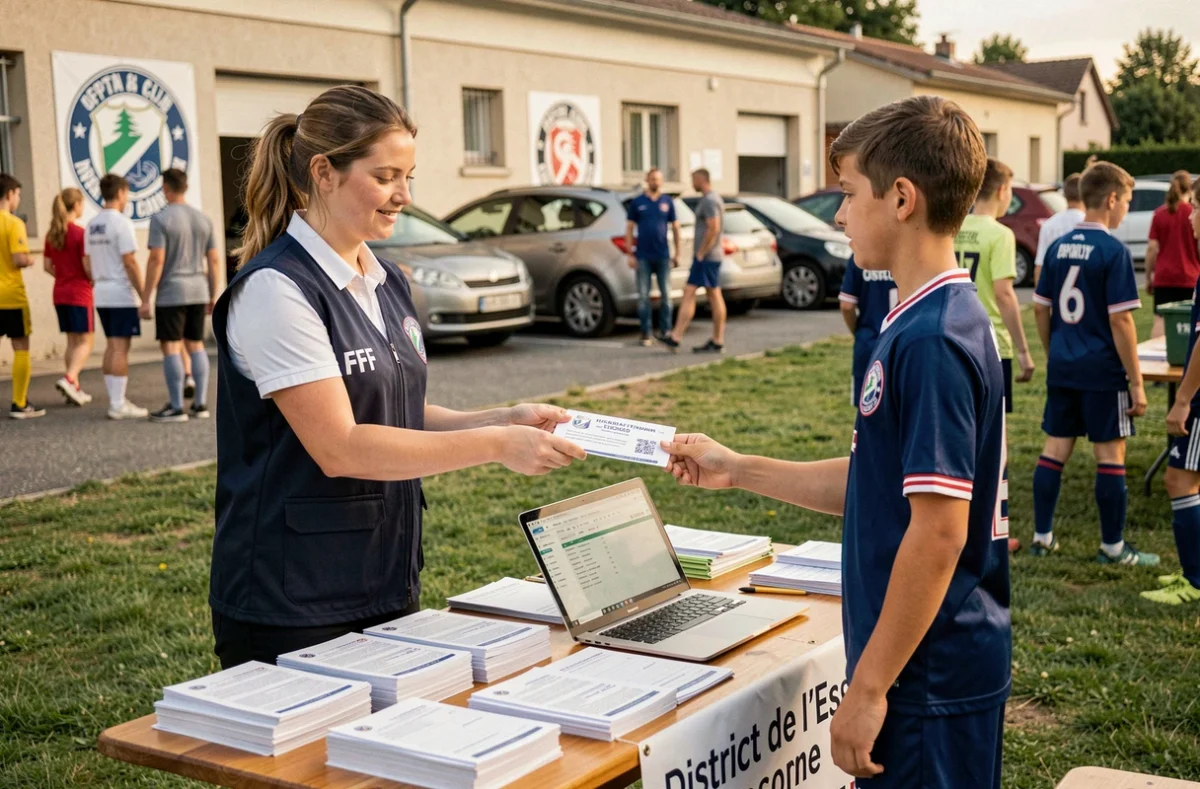
Amateur refereeing in Essonne: recruitment challenges and new tools
A district does more than manage matches and player registrations. It also coordinates referees across its territory. Recruiting, training and retaining referees remains an ongoing challenge for districts, including in Essonne.
Why is this such a sensitive issue? Because there can be no match without a referee. A shortage of officials leads to postponements, matches overseen by referees in training or, in extreme cases, cancellations.
Body cameras: a system being rolled out more widely
The FFF has announced the wider rollout of body cameras for amateur referees, following a trial in several departments and leagues. The Federation’s report found that referees surveyed during the trial felt less unsafe.
The system raises practical questions for districts. Footage is retained under strict rules: it may be deleted if no incident is reported, and a disciplinary committee may request it within a specified timeframe. For a district, this means incorporating data management into the handling of incidents, not simply ensuring that the equipment is present on the pitch.
Referee numbers are rising again nationally, but retention remains a challenge. A referee who starts at 16 and quits after two seasons does little to solve the structural problem. Districts are developing continuing education pathways and support for young officials to encourage them to stay involved for longer.
Inclusive football and diverse formats at the departmental level
A district’s role goes beyond traditional 11-a-side football. In Essonne, several formats operate under the district’s authority: futsal, recreational football, school football and women’s football. Each has its own organizational rules and time slots, and sometimes its own dedicated committees.
The Federal Educational Program (PEF) also encourages clubs to incorporate educational initiatives—covering health, citizenship and the environment—into their activities. The district confirms clubs’ participation in the program and shares resources from the federation.
The district also runs free continuing education sessions for coaches, open to club volunteers. These cover everything from coaching methods for younger age groups to regulatory changes for the current season.
Like its counterparts in other departments, the Essonne district remains the main point of contact for amateur clubs. Its mission can be summed up in one sentence: to keep local football running within a regulated and accessible framework. Whether you are a club official, player, parent or referee, this is the level where most day-to-day issues are resolved.