
The market for connected devices and embedded artificial intelligence is evolving at a pace that makes technological monitoring almost mandatory. Between new European regulations on personal data, watches capable of measuring blood pressure, and smart glasses that raise unprecedented legal questions, this year’s tech products are not just simple cosmetic updates.
European Data Act and connected devices: what changes for your personal data
Before discussing gadgets, a legal framework deserves the full attention of buyers of connected products. Since September 12, 2025, the European Data Act grants users the right to retrieve data generated by their watches, bracelets, and health sensors, and to transfer it to another provider.
This portability concerns heart rate measurements, sleep tracking, physical activity data, and location. For products launched after September 12, 2026, this data must be directly accessible by default, without any additional steps required from the user.
In practical terms, a man investing in a high-end connected watch this year will be able to switch brands without losing his health data history. This is a purchasing criterion that classic tech comparisons rarely mention but which significantly influences the long-term value of a device. Tech enthusiasts following news on Masculin info tech will regularly find analyses on these regulatory issues applied to everyday products.
Connected watches and health tracking: wrist blood pressure measurement
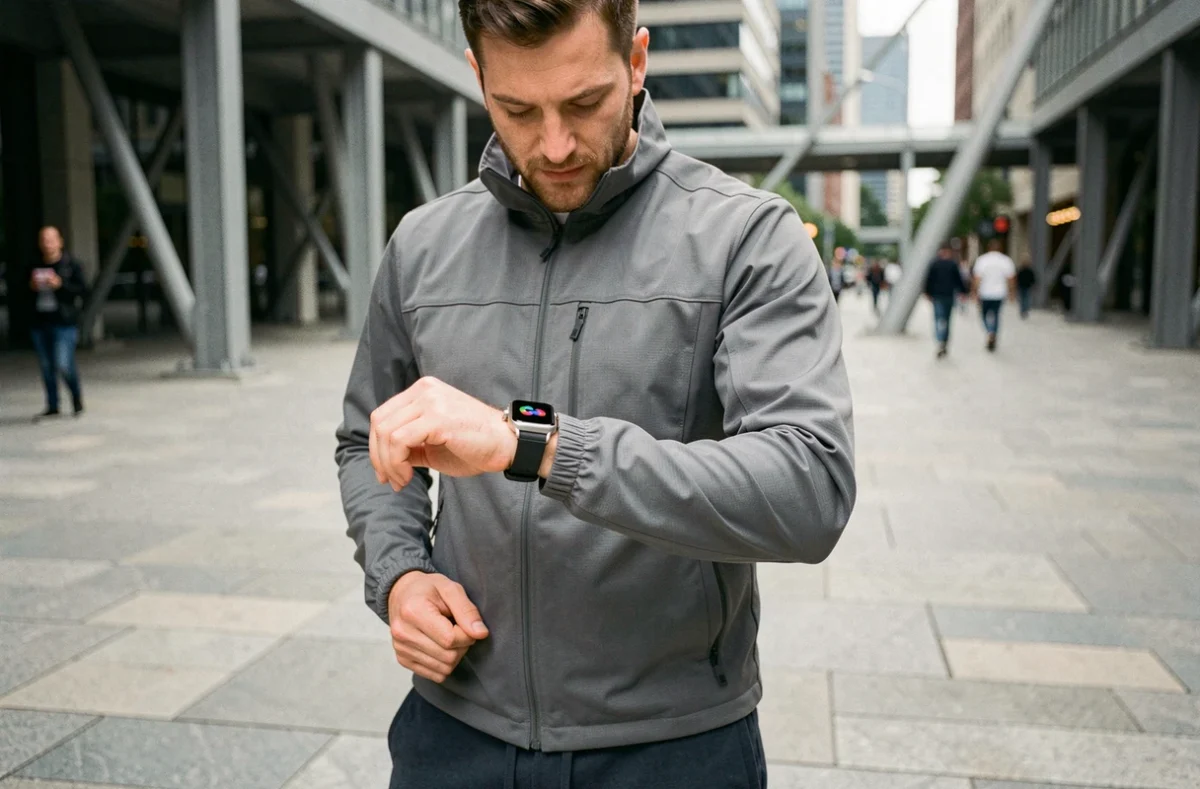
The health watch segment is reaching a significant technical milestone. The Huawei Watch D3, introduced in September 2026, features a wrist blood pressure sensor that no longer requires an external cuff. The integrated inflatable band measures pressure directly, distinguishing it from the optical estimates offered by most competitors.
This type of watch is aimed at those who want regular medical monitoring without wearing a traditional blood pressure monitor. The accuracy of a wrist sensor remains lower than that of a certified medical device, but the convenience of automatic daily measurement more than compensates for trend tracking.
Criteria to check before buying a health watch
- Compatibility with the Data Act: does the manufacturer guarantee the export of your data to a third-party service, or are your measurements locked within its ecosystem?
- The type of blood pressure sensor: a measurement by integrated inflatable cuff (like on the Watch D3) differs from a simple estimate by optical photoplethysmography, which is much less reliable
- Regulatory certification: some watches display health data without being classified as medical devices, limiting their clinical value
Smart glasses: between innovation and legal restrictions
Connected glasses capable of recording video, streaming sound, and integrating artificial intelligence functions are multiplying. Several models allow for point-of-view filming, obtaining contextual responses via AI, or projecting information into the field of vision.
The technical aspect is no longer the main barrier. The real issue in 2026 is the legal framework for their use. The Luxembourg CNPD published practical guidance in August 2026 on audio-video recordings made by these glasses, cloud storage of captures, and the consent of filmed individuals.
In the UK and several European countries, public places have begun to ban smart glasses. Cinemas and at least one British pub chain refuse entry to wearers of connected glasses. These restrictions are not a fantasy: they reflect a real tension between the convenience of the device and the right to image of surrounding individuals.
What this means for a buyer
Investing in high-end smart glasses without checking their compliance with local regulations exposes one to mishaps. A model that records continuously without a visible light signal for third parties poses a legal problem in most European countries.
Before purchasing, it is better to ensure that the manufacturer incorporates signaling mechanisms (recording LED, sound notification) and that cloud storage complies with GDPR. The price of the product matters less than its compliance if the goal is to use it daily in public spaces.

Embedded artificial intelligence: local processing replaces the cloud
One of the most significant developments this year concerns the shift of AI processing from remote servers to the devices themselves. This concept, known as Edge AI, allows a smartphone, security camera, or audio headset to process data locally, without sending every request to a data center.
The benefits are tangible: reduced response times, offline operation, and above all, better protection of personal data since information does not leave the device. For connected health devices, this means that biometric measurements can be analyzed in real-time on the watch itself.
This trend also changes the criteria for choosing a smartphone. The power of the neural processing unit (NPU) now matters as much as the quality of the camera for users who leverage AI functions daily: voice transcription, real-time translation, scene recognition, or intelligent notification filtering.
- A powerful NPU enables real-time audio transcription without an internet connection, useful in meetings or on the go
- Local translation functions work in areas without network coverage, making them reliable while traveling
- Local AI photo processing reduces the delay between capturing an image and the final rendering, where cloud processing introduced noticeable latency
Choosing a tech device in 2026 is no longer limited to comparing fixed technical specifications. Data portability, legal compliance, and local processing capability create a more demanding but also more protective framework for the user. Keeping these three criteria in mind at the time of purchase avoids costly regrets a few months later.