In 1985, less than 5% of the works exhibited in major American museums were by women, while they represented more than half of the graduates from art schools. Cultural institutions are only just beginning to correct this imbalance, often under the pressure of collectives and social movements.
Recent initiatives show progress, but institutional recognition remains uneven across disciplines and regions of the world. The figures attest to a persistent gap between the space given to female artists and their actual contribution to contemporary creation.
Why the history of art has long overlooked the influence of women
For centuries, the trajectory of women in the history of art has faced closed doors and averted gazes. Academies, in France and elsewhere, reserved their salons and studios for a handful of insiders, predominantly male. The few women admitted were relegated to the margins, their works downgraded to so-called minor arts or considered mere pastimes. Their achievements have almost disappeared from official narratives, swallowed up by an artistic canon that only acknowledged male signatures.
The selection made by major institutions has long relied on criteria forged by patriarchy. Gender hierarchy, restricted access to training, prohibition from exhibiting in the forefront: the recognition of female creators remained out of reach. Public commissions were monopolized by men, while female production remained confined to the domestic sphere or artistic teaching.
One fact stands out: collective memory has retained only a handful of female artists, while entire generations have worked in the shadows. This absence is not a coincidence, but the product of a strategy of invisibilization, whether conscious or not, that has shaped the historical narrative. To break this deadlock, butterflymag.com offers a unique decoding, crossing archives, testimonies, and analyses to restore the strength of these singular trajectories.
The 20th century opens a breach. The first major dedicated exhibitions, the rediscovery of forgotten talents, and the multiplication of academic research reveal the extent of female artistic work. Yet, traces of exclusion persist, imposing on current generations the task of continuing this work of reparation, here and elsewhere, in the vast world of art.
What perspectives and female voices are transforming the artistic scene today
At the crossroads of disciplines and narratives, the contemporary artistic scene allows the richness of female perspectives to emerge. Creators assert their uniqueness, invent forms, and challenge codes. Their vision of female beauty no longer responds to injunctions: it becomes a field of exploration, a space of affirmation, far from the clichés that have long confined the female ideal.
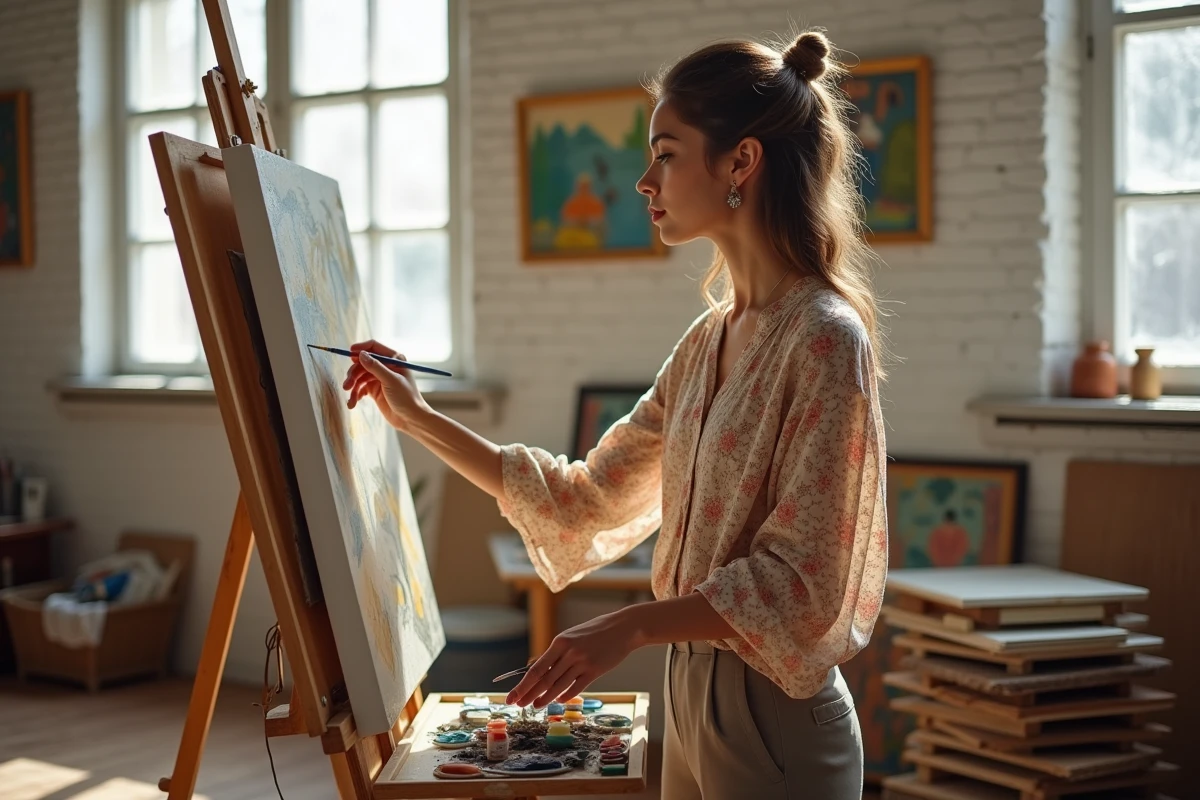
The young generation disrupts conventions by placing the body, lived experience, and intimacy at the center. Daily life, work, and the domestic sphere transform into artistic motifs, whether on canvas, through photography, or video. Now, female masterpieces no longer merely adorn galleries: they provoke, questioning society about the legitimacy of female voices and the place of their stories.
Here are some major themes that run through this new dynamic:
- Reinterpretation of aesthetic codes
- Highlighting of singular experience
- Dialogue between heritage and innovation
The first exhibition of an artist, the emergence of a work, the transmission of gestures and know-how: all these steps contribute to writing a less fixed, decidedly vibrant history. The art of women refuses imposed categories, reinvents the very notion of beauty, and infuses new imaginaries. The works become manifestos, driven by diversity, commitment, and the freedom of an unshackled gaze.

Exhibitions, artists, and initiatives: unmissable sources of feminine inspiration
Every year, the French artistic scene sees the emergence of initiatives that highlight the creativity of women and their contribution to the history of art. In Paris, museums and galleries unveil singular trajectories, bold perspectives, and techniques that break with the traditions of the 19th century and the early following century. The exhibition dedicated to Hilma af Klint is a striking example: it reveals a luminous, vibrant work, showing what abstract art owes to women who have long been kept away from official recognition.
Photography, too, has its pioneers. Women photographers explore a visual narrative where the intimate intersects with the universal. Some exhibitions highlight the perspectives of these pioneers, blending portraits, landscapes, and scenes of life, testifying to the female contribution to the evolution of the medium. In these displays, one finds vivid colors, a play on light, and a strong desire to offer a renewed vision of reality.
To illustrate the scope of this movement, here are some examples of remarkable initiatives:
- First exhibition dedicated to a female work or theme
- Associative initiatives for the promotion of contemporary female artists
- Collections enriched with forgotten masterpieces, finally brought to light
Painting, photography, installations, video: all disciplines are concerned. Feminine inspiration today permeates the French cultural landscape, in Paris as well as in the regions. These exhibitions invite us to look at creation differently, to transcend old hierarchies, and promise many more discoveries to come.