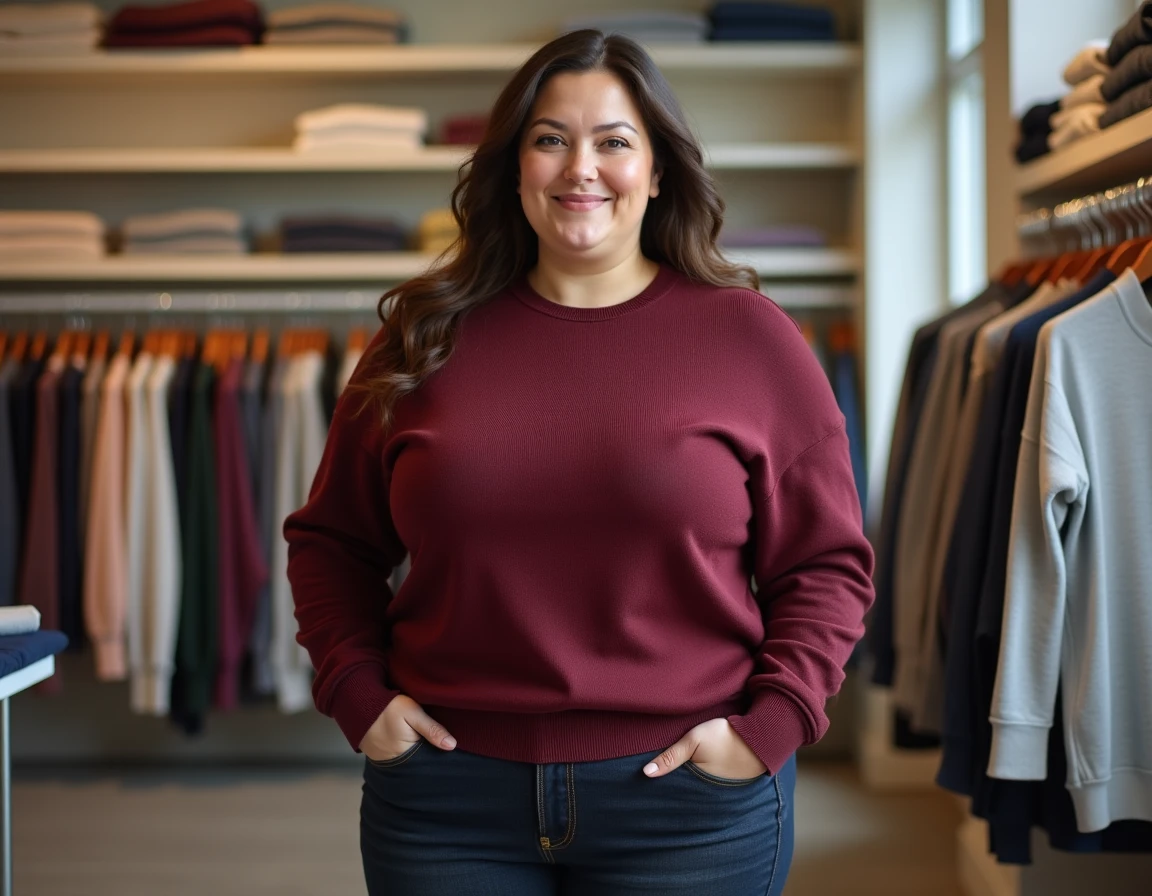
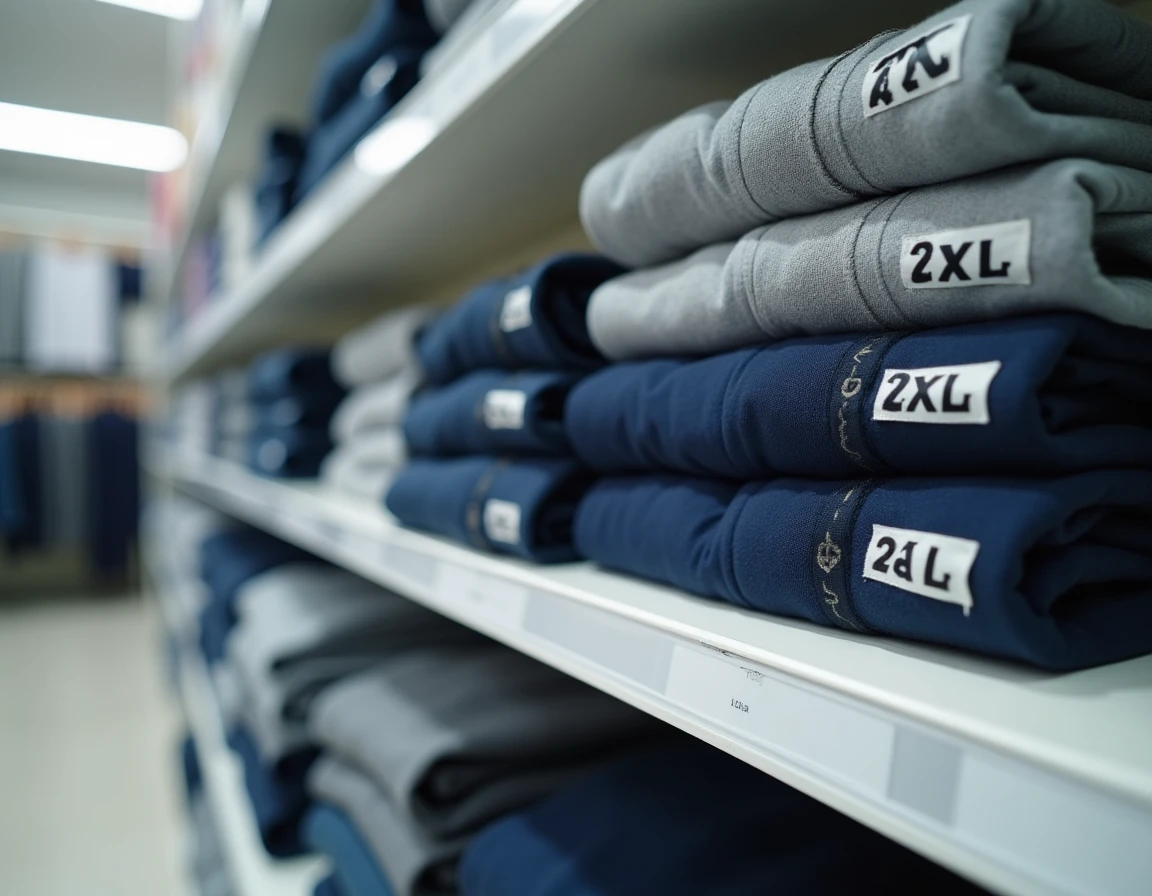
The size 2XL does not correspond to a universal measurement. Depending on the brand, the country of manufacture, or the type of clothing, the centimeters associated with this letter can vary surprisingly. Understanding what lies behind this label allows for more accurate purchasing, especially when hesitating between two sizes or ordering online without the ability to try on.
Size 2XL for women and men: the actual measurements behind the label

In France, size 2XL (or XXL) generally corresponds to a 50 or 52 for women. For tops (t-shirts, blouses, jackets), this covers a bust measurement between 110 and 122 cm and a waist measurement between approximately 90 and 106 cm. For pants, skirts, and dresses, the hip measurement then falls within a range of 112 to 122 cm.
For men, 2XL is closer to a 56 or 58 in French sizing, with significantly wider chest and waist measurements. These ranges serve as guidelines, but they are not set in stone.
A table from online size guides (notably Cyllène Mode) provides an overview for women:
| International size | French size | Bust measurement (cm) | Waist measurement (cm) |
|---|---|---|---|
| XL | 44-48 | 98-110 | 78-90 |
| XXL (2XL) | 50-52 | 110-122 | 90-106 |
| XXXL | 56-58 | 128-140 | 114-130 |
Knowing what size 2XL corresponds to in precise centimeters remains the foundation before any purchase, especially between two brands whose size charts do not always overlap.
Taking measurements with a tape measure: the gesture that changes everything
Reading a size guide without knowing your own measurements is like consulting a map without knowing your location. A flexible tape measure is enough. Three areas count for most clothing:
- The bust measurement is taken at the fullest part of the bust, passing the tape under the armpits and across the middle of the shoulder blades, without tightening.
- The waist measurement is taken at the natural waistline, usually above the navel. You should breathe normally and not suck in your stomach.
- The hip measurement is taken at the widest part, encompassing the buttocks.
A difference of two or three centimeters can shift you from one size to another. Measuring while standing, without thick clothing, gives the most reliable result. The tape measure should remain horizontal and flat against the skin.
Technical clothing and layering: when 2XL is not enough
The choice of 2XL takes on a different dimension when it comes to work clothing, sports suits, or gear where multiple layers are worn. Guides for suits and technical clothing indicate that a size larger than XL is recommended when wearing thermal underwear, fleece, or personal protective equipment under the main garment.
For wetsuits, the logic sometimes reverses. Some specialized guides recommend the smaller size when you are between two sizes, to ensure a snug fit that prevents water from entering. For everyday clothing, the prevailing recommendation is to opt for 2XL rather than remain in a too-tight XL, to avoid pulling at the seams.
The difference lies in the role of the garment. A technical garment close to the body (neoprene, compression) performs better when it hugs the skin. A t-shirt, softshell jacket, or work pants gain comfort when they allow for a range of movement.
Choosing 2XL when in doubt: comfort versus fit
Field feedback varies on this point. In online communities and among specialized content creators, a consensus emerges: the switch to 2XL is often linked to the search for ease around the shoulders, chest, or belly. Accepting to go up a size when you are between two, rather than forcing into a tight XL, is regularly shared as advice by those concerned.
The question goes beyond the simple choice of letter on a label. An overly large 2XL floats and distorts the silhouette, while a too-tight XL marks the seams and limits movement. Three criteria help make the decision:
- The fabric of the garment: a stretchy fabric (spandex, jersey) allows for a slight discrepancy. A rigid cotton or raw denim does not.
- The cut indicated by the brand: a “regular” cut often fits wider than a “slim” cut in the same letter.
- The intended use: a garment worn sitting all day (office, driving) requires more ease at the waist and hips than a garment worn standing.
Comparing your measurements to the specific brand’s guide, rather than a generic guide, remains the safest method. Two brands labeled “2XL” can have several centimeters of difference in bust measurement or sleeve length.
2XL size equivalents between countries: beware of discrepancies
A European 2XL does not cover the same measurements as an American or Asian 2XL. International size charts are not standardized. In practice, a 2XL ordered from an American site will often be roomier than a 2XL purchased from a French retailer. Conversely, Asian brands often size smaller, and an Asian 2XL may correspond to a European L or XL.
When ordering from abroad, relying solely on the letter displayed almost always leads to disappointment. The only reliable data remains the measurement chart in centimeters provided by the seller. If this chart does not exist, it is better to contact customer service or look for feedback from buyers with similar measurements.
The size 2XL is neither a unique format nor a fixed standard. It depends on the manufacturer, the country, the cut, and the type of clothing. Taking your own measurements, comparing them to the exact size chart of each brand, and accepting that the right size may change from one retailer to another: this is the only method that works for every order.