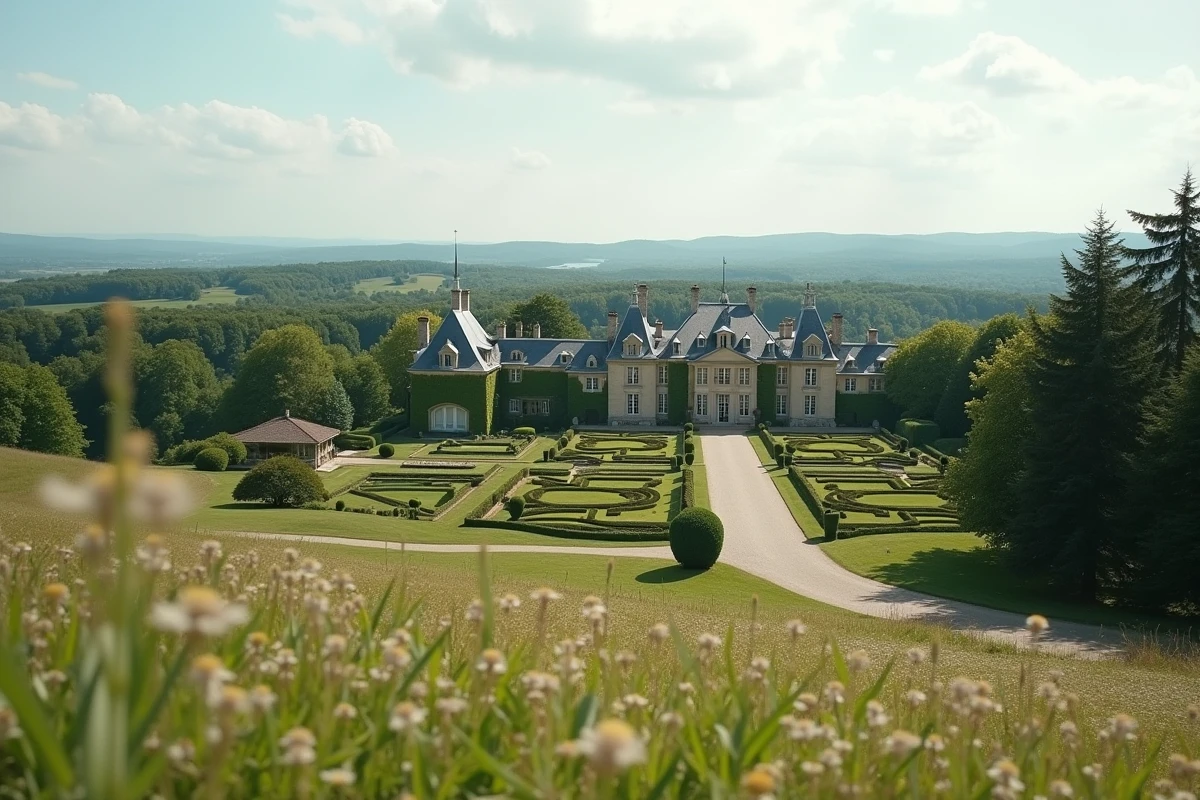
Some private properties in France exceed the area of entire municipalities. The Armainvilliers estate, in Seine-et-Marne, occupies a unique place in the hexagonal heritage. Formerly owned by the Rothschild family, this property alone concentrates an often-overlooked aspect of French land history, where dense forest, remarkable architecture, and management secrets coexist away from prying eyes.
Security and Technological Intrusions on Large Private Estates
Can you imagine a castle surrounded by walls and uniformed guards? The reality has changed. In recent years, maintenance teams at large private estates like Armainvilliers have faced a new challenge: intrusions by drones and connected devices.
Unauthorized flyovers have multiplied, driven by the democratization of consumer drones. For owners, the problem goes beyond mere nuisance. A drone can map sensitive areas, film private events, or disturb the wildlife of a protected forest park.
The response does not involve higher fences. Estates are investing in discreet detection systems capable of identifying a flying device without altering the landscape. These devices, often custom-developed, combine radiofrequency detection and optical surveillance. The goal: to preserve privacy without turning the estate into a visible fortress.
This security aspect remains poorly documented. Owners rarely communicate about these installations, fearing to attract more attention. However, when one looks into the largest private property in France, this technical aspect is an integral part of its daily management.
Private Heritage and Tax Incentives: What the 2025 Law Changes
The management of an estate of this scale does not rely solely on family wealth. The regulatory framework plays a direct role in a owner’s ability to maintain, restore, and open – even occasionally – their property.
The “Private Heritage 2030” law, published in the Official Journal in April 2025 (law n° 2025-147), introduced enhanced tax incentives for owners who occasionally open their estates to the public. This measure aims to counter a trend observed in recent years: the complete closure of certain remarkable sites due to lack of funds or a desire for protection.
For an estate like Armainvilliers, this provision offers new leeway. Organizing a few open days a year, hosting a one-off cultural event, or allowing access to part of the forest park can now entitle owners to significant tax reductions.
This evolution is part of a broader trend. Since 2024, public-private partnerships around the restoration of private estates have multiplied, with an emphasis on integrating digital technologies for conservation, without questioning the private status of the location. The report “Heritage and Digitization 2025” from the Ministry of Culture documents this dynamic.
Private Estate or National Castle: Opposing Logics
Why does a private estate like Armainvilliers operate so differently from a national castle like Chambord? The distinction is not solely based on ownership status.
A state-owned castle follows strict rules for opening, pricing, and conservation. The works are governed by lengthy procedures, validated by several administrations. The event calendar is public, and budgets are controlled.
In contrast, a private property has considerable flexibility to organize tailored events, including receptions incorporating immersive technologies or contemporary scenography. A study by INRAP dated January 2026, titled “Private vs Public Estates: Contemporary Issues,” highlights this operational difference.
- Public estates follow a rigid regulatory framework with administrative validation at every stage of restoration or development.
- Private properties can adapt their event programs within weeks, without prior authorization (except for classified monuments).
- Technological innovations (augmented reality, 3D scanning for conservation) are adopted more quickly in the private sector, where decision-making processes are short.
Armainvilliers: Forest, Architecture, and Daily Life of an Uncommon Estate
The Armainvilliers estate is not just a castle. The property encompasses a dense forest that constitutes the bulk of its area. This wooded mass plays a local ecological role, but also an economic one: forest management represents a structural part of the maintenance budget.
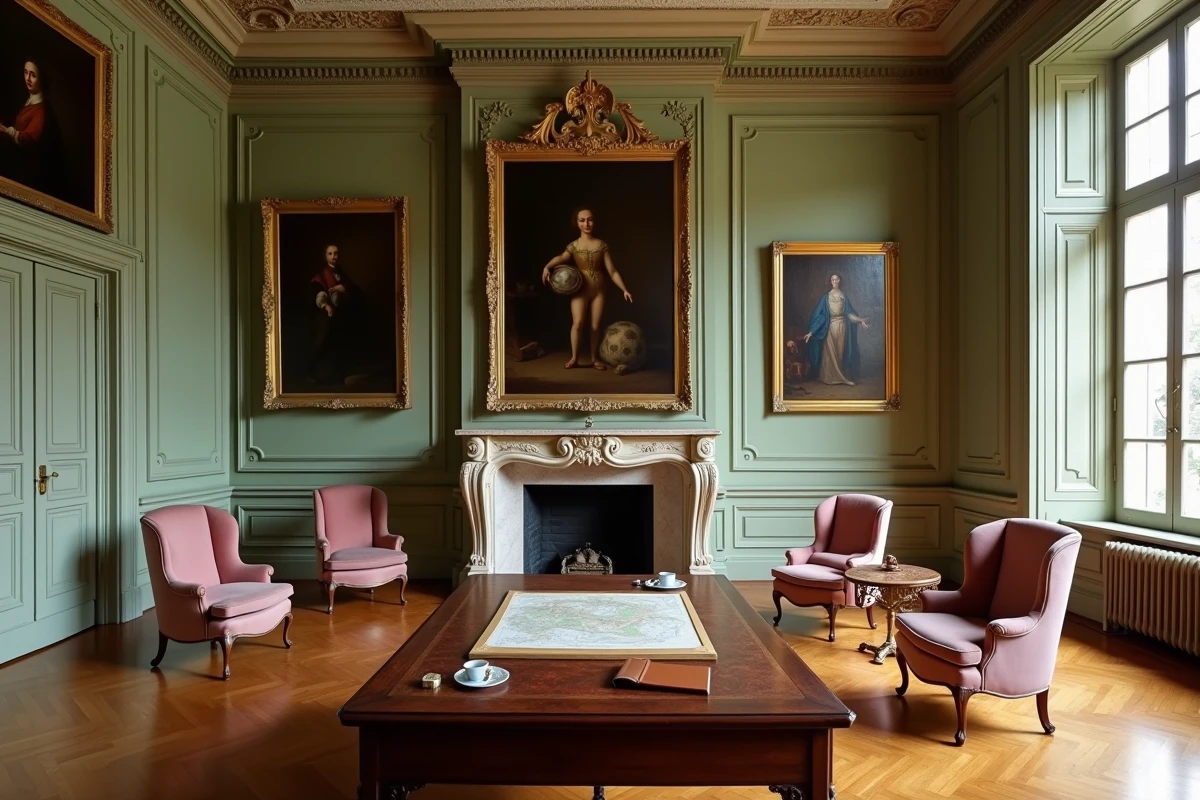
On the built side, the castle itself has undergone several phases of transformation since its acquisition by the Rothschild family. The interiors, rarely photographed, blend period elements with more recent fittings. The estate is not frozen in time: it lives, adapts, and evolves at the pace of its occupants.
The teams on site – caretakers, gardeners, specialized artisans – form a small community. Their daily work ranges from the health monitoring of century-old trees to the restoration of old woodwork. Each intervention follows a protocol that considers both the heritage value and the practical constraints of a lived-in space.
An Estate That Remains Closed to the General Public
Unlike Vaux-le-Vicomte or other private properties that have chosen regular openings, Armainvilliers remains largely inaccessible. This discretion fuels curiosity, but it mainly reflects a desire to preserve a fragile ecosystem, both natural and architectural.
The few available images circulate sparingly. Television reports or social media publications show only a fraction of the estate. The rest belongs to those who live and work there, in a daily life far removed from the fantasies surrounding large properties.
The Armainvilliers estate illustrates a little-seen reality of French heritage: some of the country’s most remarkable properties do not appear in any tourist guide. Their preservation depends on a delicate balance between private resources, fiscal frameworks, and family choices passed down from generation to generation.