
Forget everything we think we know about the simplicity of a lit candle: behind the small, tranquil flame lies a fine mechanism that comes into play. This invisible ballet, orchestrated by the wax and the wick, often escapes the naked eye, but it shapes the experience of every candle.
Natural waxes like soy wax stand out from paraffin, not only by their origin but also by their behavior under heat. This choice of raw material is not just a matter of taste or ecology: it influences the efficiency, the purity of combustion, and consequently, the environmental footprint of each candle. It is also a decisive factor when embarking on homemade candle making.
Why making your own candles is both a creative and ecological adventure
Getting started with candle making at home is reconnecting with a gesture that transcends time, while taking control of what we diffuse in our living room. By prioritizing natural ingredients, such as beeswax, soy wax, or vegetable wax, we resolutely move away from paraffin derived from the petroleum industry and its additives, whose transparency is questionable. This choice, driven by the desire to reduce our impact on the planet, is accompanied by an elevation in the final quality.
Candle making becomes a testing ground: we can modify shapes, containers, and scents to match our desires or the desired ambiance. Natural fragrances, extracted from essential oils or raw materials, influence not only the atmosphere but also the purity of the air. Making your own candles combines creative pleasure with a commitment to healthier air, far from undesirable residues.
This exercise also requires examining the mechanism of combustion. Understanding the stages of candle combustion allows us to adjust the wick size, choose the right wax, and control the stability of the flame. This technical mastery, at the heart of the art of candle making, is a guarantee of safety and quality for the objects we bring into our homes.
This return to handmade responds to a strong demand: that for more environmentally friendly products. Opting for a cotton wick, banning unnecessary additives, paying attention to every detail—all of this gives meaning to the process. And, in the end, we gain the pleasure of an object shaped to our measure.
The secrets of candle combustion: what really happens when the flame is lit
The spectacle begins as soon as the wick catches fire. This simple cotton thread, soaked in wax, ignites the solid wax around it. Gradually, the wax becomes liquid, rises along the wick by capillarity, and then transforms into vapor due to the heat. This change of state initiates the creation of combustible gases.
Combustion then occurs when these gases meet the oxygen in the air. The result: heat, light, but sometimes also soot, a sign that adjustments are needed. The balance between the wick, the quality of the wax, and the possible presence of additives affects the stability of the flame and the clarity of the combustion.
The famous melt pool, this surface of liquid wax, depends on the diameter and type of wick used. If the wick is too thin, it cannot create enough liquid; if it is too wide, it overheats, causing soot or a blackened deposit at the tip, known as mushrooming.
Serious artisans subject each recipe to a candle combustion test. During this test, they monitor the size of the flame, the extent of the melt pool, the temperature of the support, the production of soot, and the consistency of the combustion. This protocol ensures not only safety but also an experience true to what the candle promises.
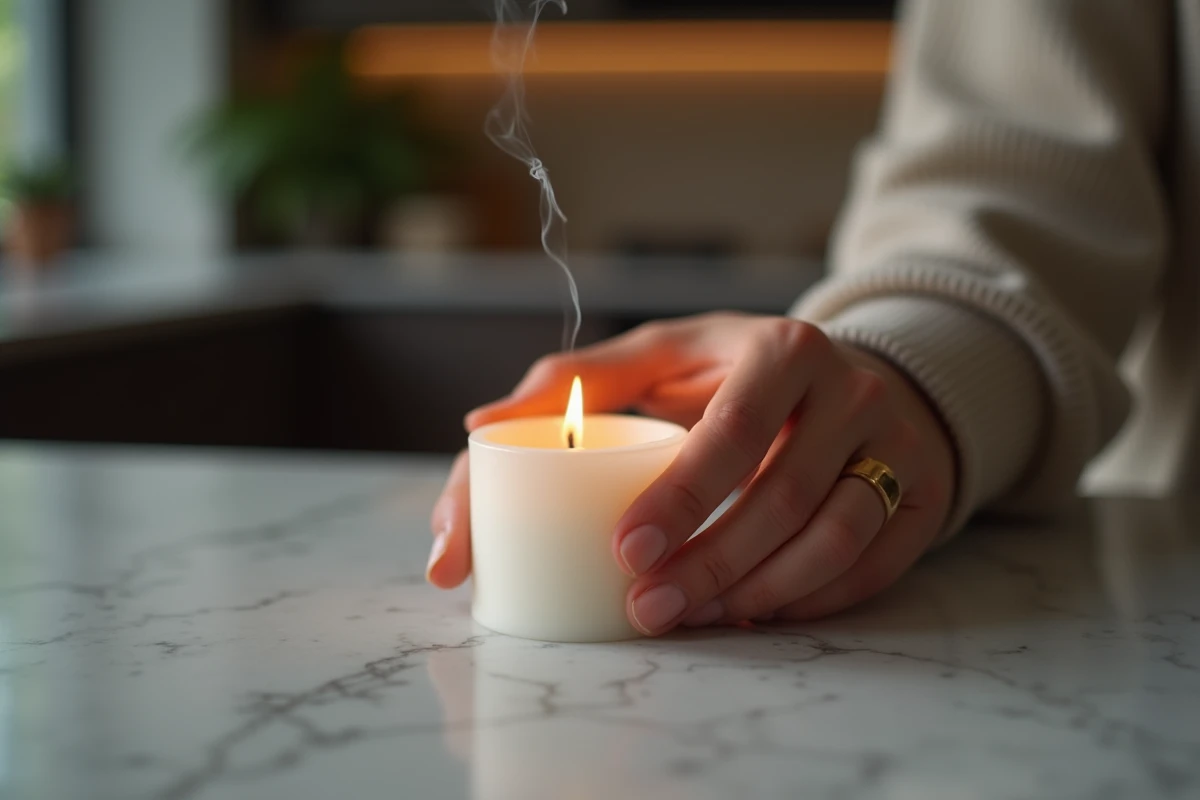
Natural waxes, fragrances, and benefits: how to choose healthy ingredients for eco-friendly DIY candles
Enthusiasts of homemade candle making know that the choice of components determines the quality and reach of the creations. Beeswax, soy wax, and vegetable wax, all sourced from renewable resources, eliminate paraffin derived from petroleum. This choice limits exposure to undesirable chemical compounds and lightens the ecological footprint.
To ensure a consistent and clean burn, prioritize a cotton wick free of metal cores. Incorporating natural additives like carnauba wax or vegetable stearin allows for a homogeneous texture and preserves the purity of the fragrances. As for the fragrances, it’s better to rely on essential oils or natural extracts to avoid the release of substances such as phthalates or residual solvents during combustion.
Here are the main options for choosing a suitable wax:
- Beeswax: emits a delicate fragrance, burns slowly, and naturally creates a warm atmosphere.
- Soy wax: offers a soft texture, faithfully reproduces aromas, and degrades without polluting.
- Vegetable wax: provides a varied range, ideal for meeting ethical or ecological requirements.
Mastering these choices ensures environmentally friendly candles, safer for health and indoor air quality. Adding natural colorants, derived from plants or clays, completes the commitment to uncompromising creation. The quality of the raw materials affects the duration of the burn, the diffusion of fragrances, and the safety of use. Each candle has its signature, its character, and the certainty of an object that leaves nothing to chance.