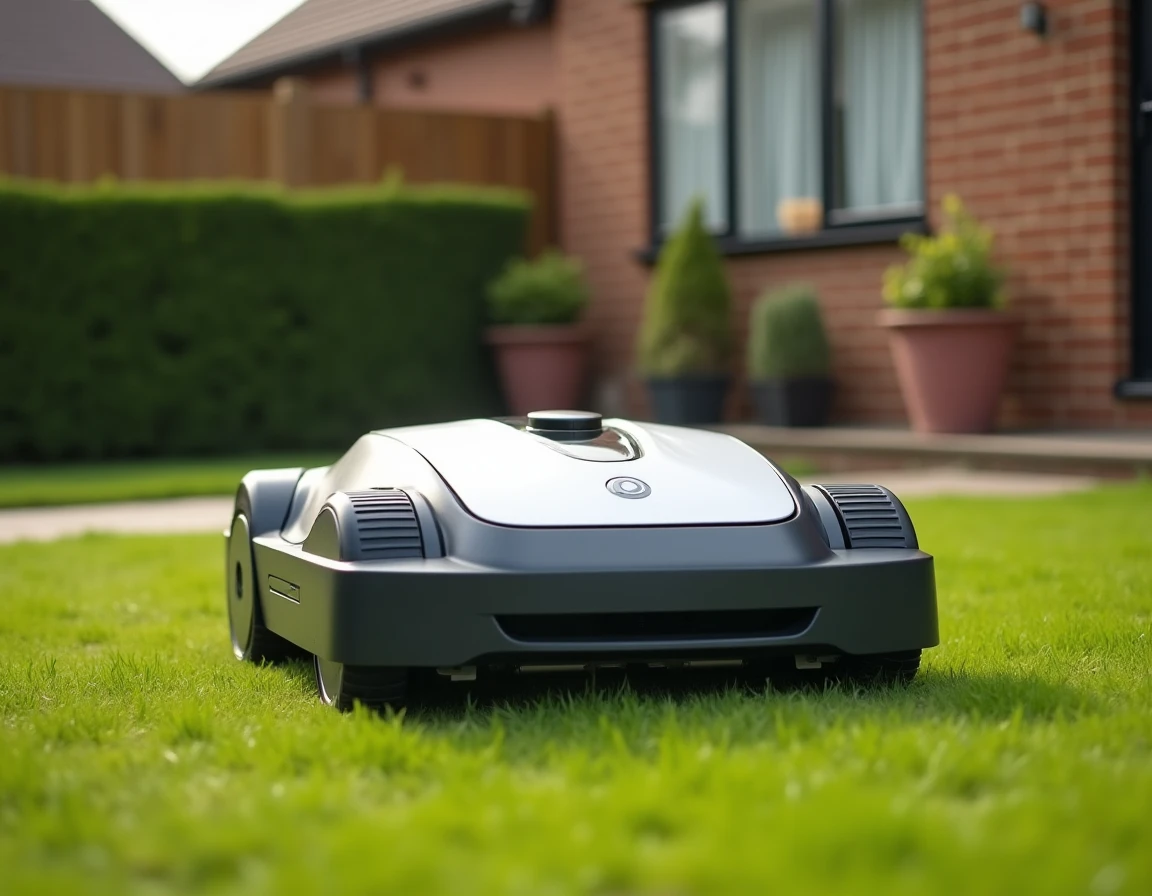
A robotic lawn mower operates several hours a week, sometimes seven days a week during the mowing season. The question of electricity costs consistently arises before purchase. Available figures show a low annual consumption in absolute terms, but several energy expenditure items remain poorly identified by users, particularly the floating charge off-season and the consumption of the base station in standby.
Floating charge and winter standby: the invisible consumption item of the robotic lawn mower
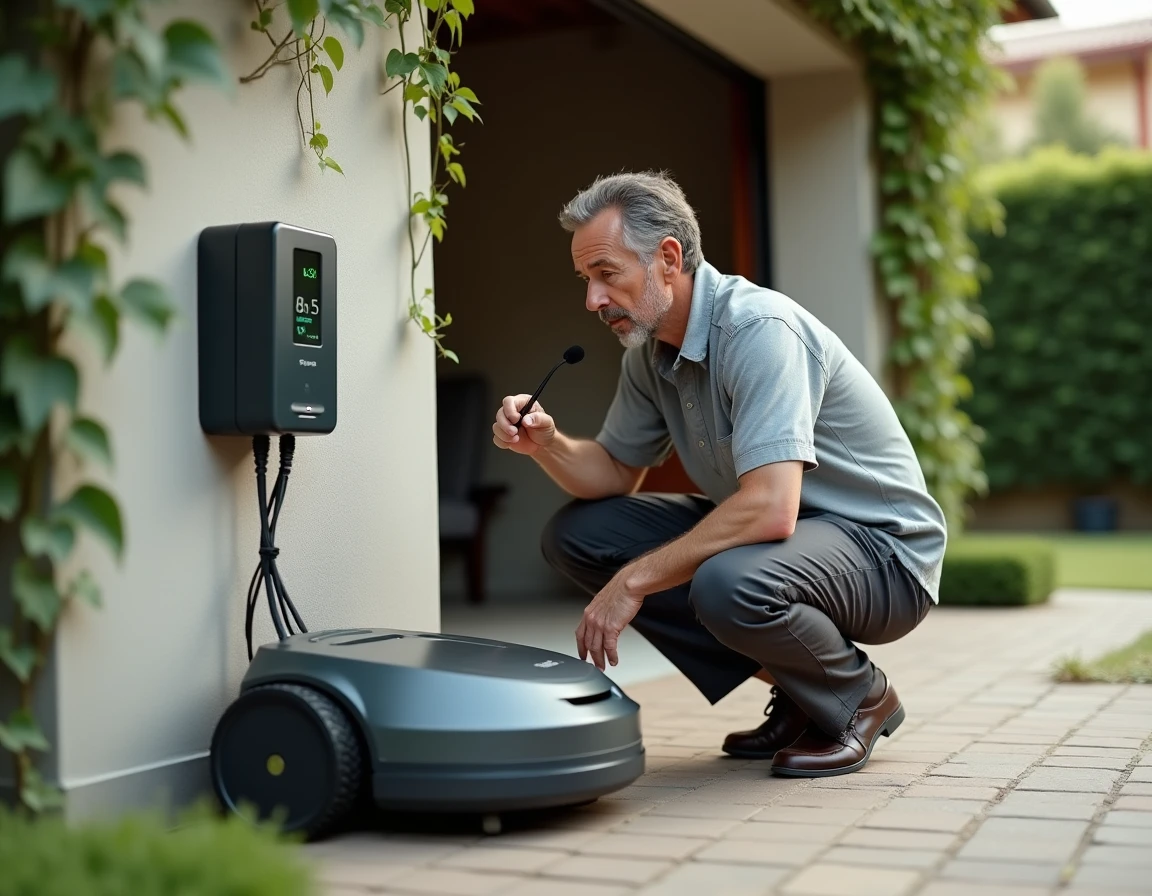
Most guides focus on consumption during active mowing. However, the most neglected item occurs between November and March, when the robot remains plugged into its base without ever mowing.
During this period, the permanent floating charge keeps the battery at full capacity continuously. This consumption is “pure waste,” as the robot does not perform any mowing cycles. Unplugging the base during winter storage and storing the battery in a temperate location eliminates this waste while adhering to manufacturers’ storage recommendations.
In the active season, the standby charging station can account for up to half of the electricity consumption of a robotic lawn mower. This point is rarely highlighted in product sheets, which display the motor power without mentioning what the base consumes continuously.
Actual consumption in kWh: what the technical data says
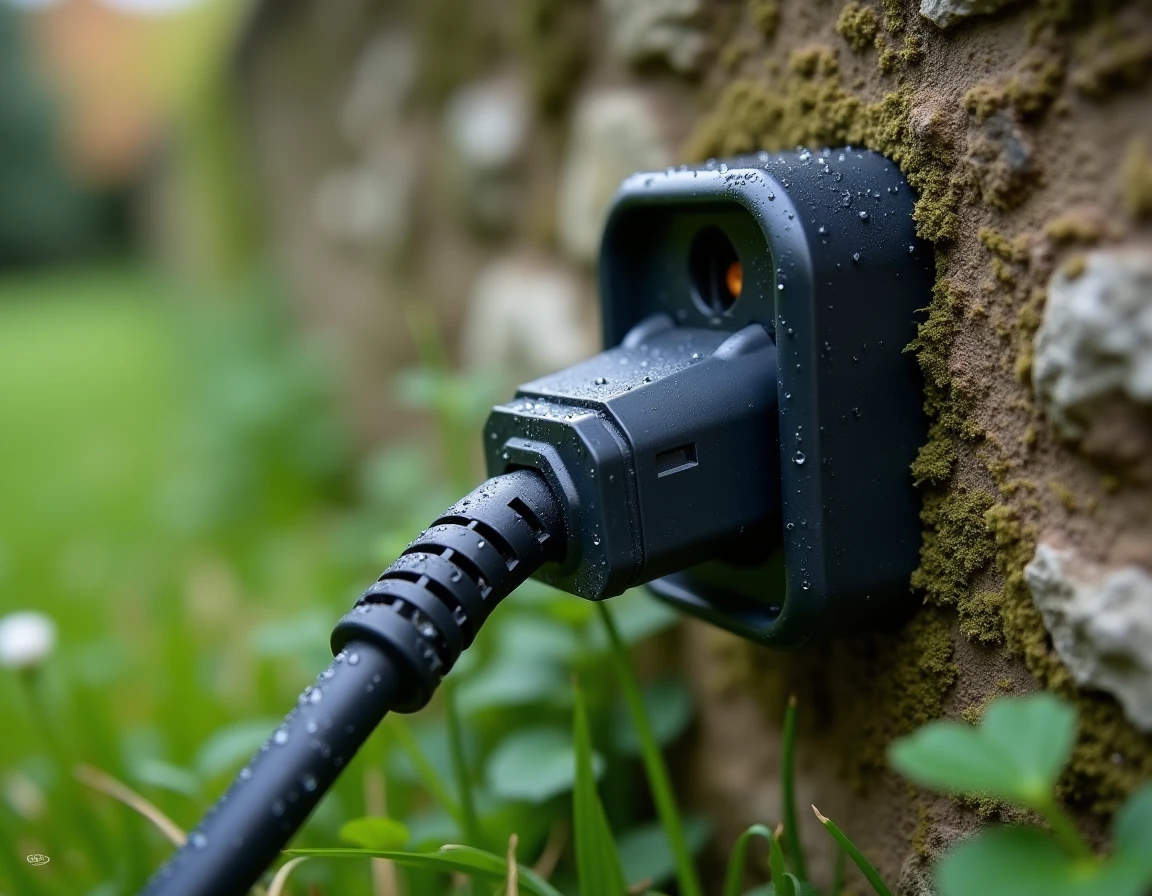
Robotic lawn mowers are equipped with low-power motors compared to wired or thermal mowers. Monthly consumption during active mowing ranges between 5 and 15 kWh per month depending on the size of the garden and the frequency of use. Over a full year, this results in a range of 15 to 40 kWh per year.
Translated into euros, the annual electricity cost ranges from a few euros for a small plot to around thirty euros for a large area. At the regulated EDF base rate, around 0.2516 euros per kWh, even intensive use remains marginal on the household’s overall bill.
Comparison with a wired electric mower
A wired electric mower consumes between 1,000 and 1,500 watts during each mowing session. The robot, on the other hand, operates at a much lower power, spread over short and frequent cycles. Competing data converge: a robot consumes two to five times less than a conventional electric mower over a season.
This difference is explained by the operational logic. The robot cuts little grass with each pass, which reduces mechanical effort and thus power demand. The wired mower, used once a week, must deal with taller grass, which puts more strain on the motor.
Off-peak rates and nighttime programming: a real reduction in charging costs
Programming the robot’s charging during off-peak hours is the most direct savings lever. With an off-peak rate close to 0.2068 euros per kWh, the reduction reaches 30 to 50% on the recharging cost compared to peak rates.
In practice, it is enough to set the robot to mow at the end of the day and return to charge at night. Most recent models allow users to define charging time slots via an app. Over a full season, this programming transforms an already low cost into a nearly negligible expense.
Limitations of this approach
Not all electricity contracts offer the off-peak option. Checking one’s contract before relying on this saving is a simple but often overlooked prerequisite. Furthermore, off-peak time slots vary by suppliers and regions, which requires checking one’s meter or customer area for the exact times.
Electricity and total cost of ownership: putting the bill in perspective
The debate over the electricity consumption of a robotic lawn mower deserves to be placed in the context of the total cost of ownership. Over five years of use, electricity generally accounts for less than 5% of the total budget. The truly significant items are the purchase of the robot, the replacement of the battery, and the regular changing of the blades.
A set of blades is replaced several times per season depending on the intensity of use. The battery loses capacity after a few years, and its replacement represents a non-negligible cost. Focusing attention on the electricity bill amounts to optimizing a marginal budget line while ignoring structural expenses.
The most effective long-term savings levers focus on three distinct areas:
- Regularly maintaining the blades to maintain optimal cutting efficiency and prevent the motor from compensating by consuming more
- Properly storing the battery in winter (stable temperature, partial charge) to preserve its lifespan and delay its replacement
- Unplugging the base station off-season to eliminate unnecessary standby consumption for several months
These actions are not spectacular, but they target the items that truly impact the budget over time.
Navigation and technology: an underestimated consumption factor
Two robots of identical power can show very different consumption levels depending on their navigation technology. A robot that moves randomly goes over the same spot multiple times, which extends mowing time and multiplies charging cycles.
Models equipped with GPS, RTK, or camera navigation optimize their paths and cover the area in less time. The gain in electricity consumption is direct: less operating time means fewer recharging cycles. Field reports vary on the exact extent of this gain, but the physical logic is indisputable.
The configuration of the terrain also plays a role. Slopes, narrow areas, and obstacles multiply maneuvers and increase travel time. A flat and open garden will always be less costly to maintain than a rugged terrain, regardless of the model used.
The electricity consumption of a robotic lawn mower remains a marginal budget item, rarely exceeding a few dozen euros per year. The real financial decisions are made based on the choice of model, battery durability, and blade maintenance. Programming the charge during off-peak hours and unplugging the base in winter are the two most profitable actions, requiring almost no effort.